


Conway’s Arcade: One Hardware, Infinite Games
Conway’s Arcade is an interactive installation that reinterprets vintage arcade gaming through computational systems and generative design. Unveiled at NeurIPS 2025, the project was commissioned by Google as part of its engagement with the artificial intelligence research community. The installation, developed by SpecialGuestx, translates principles of cellular automata into a physical and playable format, using computation as both content and structure.
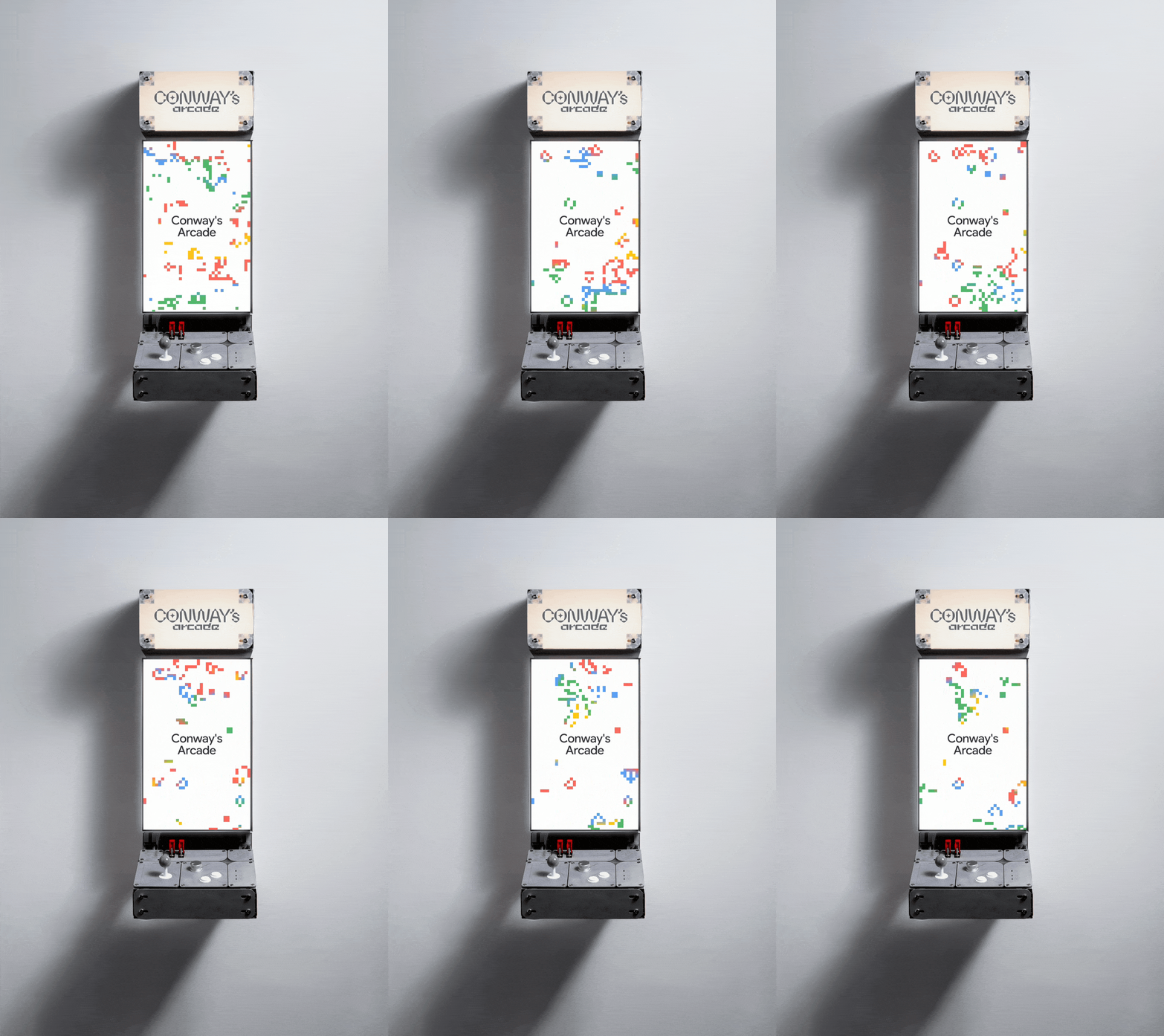
The project draws on Conway’s Game of Life, a mathematical model based on simple rule sets capable of generating complex behaviors. These principles are used to produce an open-ended gameplay system in which a single hardware platform can generate unlimited game variations. Rather than reproducing existing games directly, the installation recomposes familiar arcade formats, referencing titles such as Space Invaders, Breakout, Flappy Bird, and Chrome Dino, through AI-generated rules and logic that respond to player input.
The physical structure is fabricated entirely from aluminum and was developed through an iterative prototyping process that combined workshop-based fabrication with experimental testing. Material selection, tolerances, and assembly logic were treated as design parameters integral to the interaction experience. Fabricated in Barcelona by 6punyales, the arcade was designed for mobility, with a lightweight and modular construction that allows a single person to assemble the installation in under an hour.
all images by Paula Vázquez Guisande
Designing Gameplay Through Computational Logic
Conway’s Arcade originated as Vibe Arcade, an internal research initiative at SpecialGuestx agency focused on generative game design. The project evolved from a laboratory-based exploration into a large-scale installation presented at Google’s NeurIPS booth. Its development reflects an approach to experiential design that communicates technical concepts through shared cultural references, including arcade gaming, computational theory, and rule-based systems.
Design elements reference traditional arcade interfaces, including a custom-designed typeface, mechanical joysticks, physical buttons, and red latched switches. These components are integrated into a contemporary structural frame supported by a cohesive UX/UI and visual identity system. Cellular automata logic is translated into 8-bit graphic environments, where individual cells operate as active agents within each game session.
Each gameplay sequence is governed by adaptive, non-static logic generated by Gemini 3.0. This system produces new rule sets in real time, ensuring that no two sessions are identical while maintaining the intuitive controls associated with classic arcade machines. Rather than functioning as an emulator, Conway’s Arcade presents gameplay as an emergent outcome of computational rules, positioning design, mathematics, and interaction within a single experiential framework.
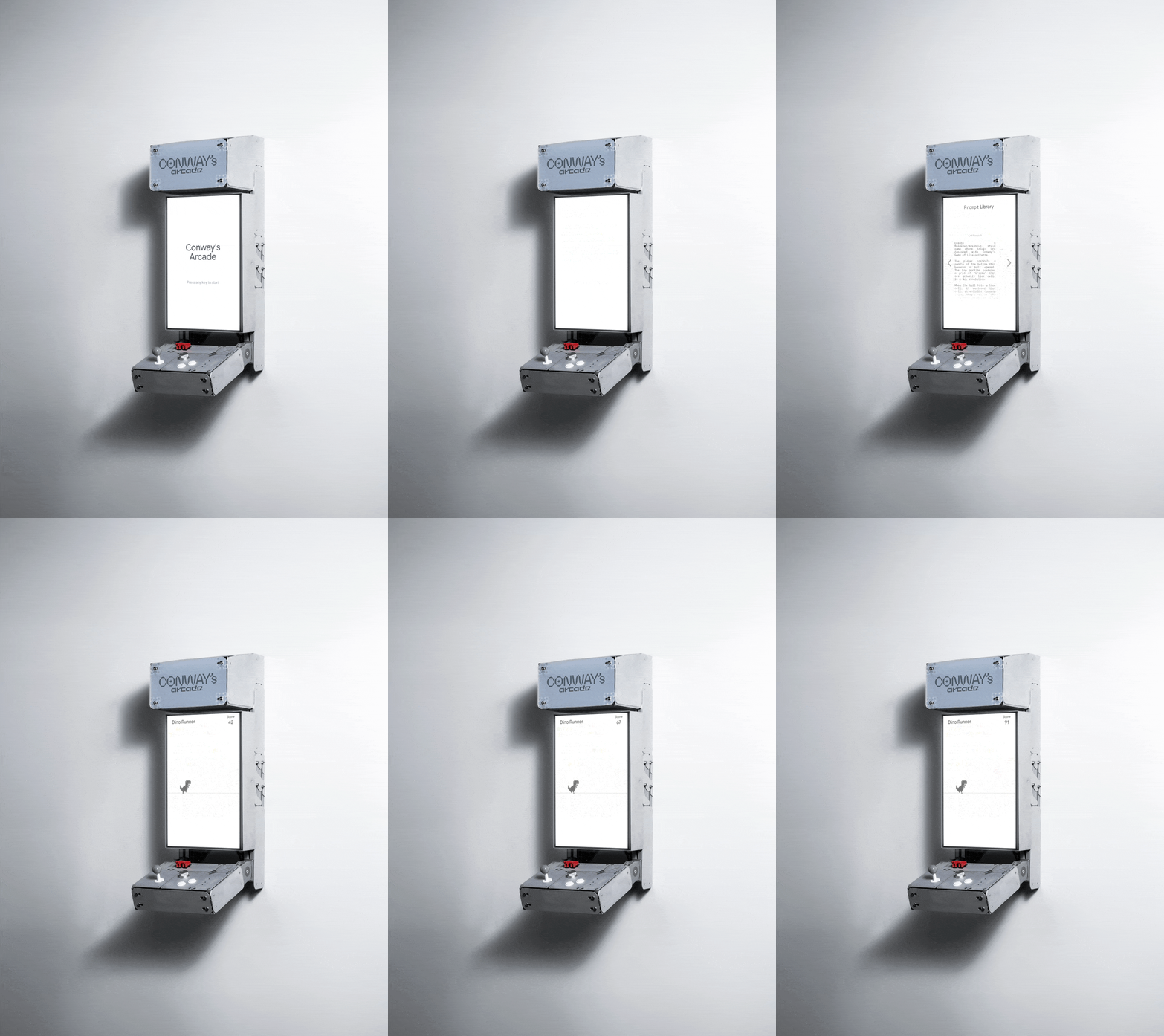
Conway’s Arcade allows players to prompt and play infinite game variations
link