


By Kevin Armstrong
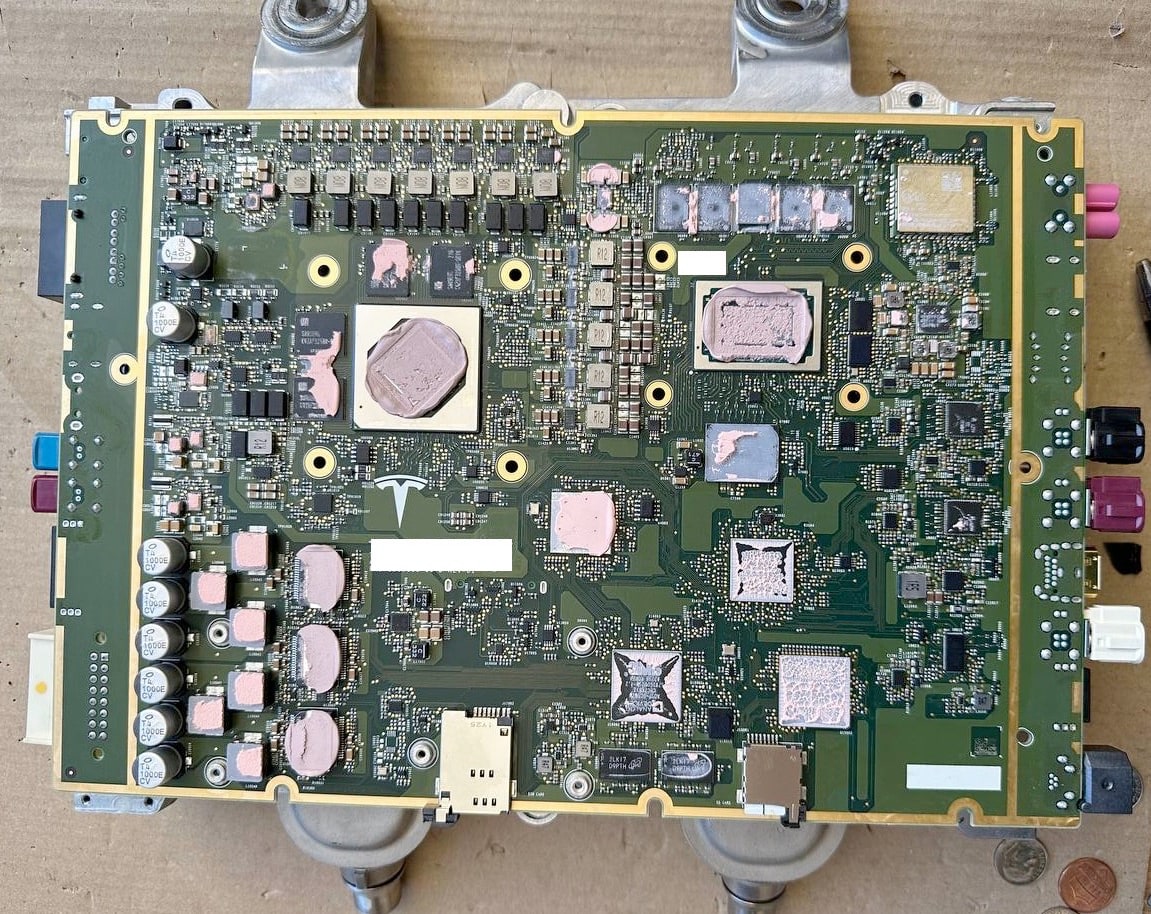
Since its introduction, Tesla’s Hardware 4 (HW4), the company’s most advanced full self-driving computer, has been shrouded in mystery. Renowned Tesla hacker @greentheonly, or Green, has uncovered more details about HW4, providing valuable insight into its technology.
2-SOC Version and Camera Layouts
Green’s analysis of firmware samples led to the discovery of the shipping version of HW4, internally referred to as the 2-SOC (System on a Chip) version. This version supports two possible camera layouts: the current one or an expanded one with added surround-view cameras, such as a front bumper camera and two additional side cameras. These cameras can run at a resolution of 2880×1876 and reach up to 45 frames per second. The main and backup cameras have unique specifications, with the vendor yet to be determined.
The new Global Navigation Satellite System (GNSS) is reportedly based on the Teseo V platform, while the radar system connects via Ethernet and operates on an internal IP address of 192.168.90.110.
Initial HW4 Camera Connectors and New Cameras
Initially, Green revealed HW4 with 12 camera connectors, and new cameras were expected to be used in HW4 vehicles. However, the first vehicles with HW4, specifically the Model S and Model X, have the new hardware but do not include the new cameras. As previously reported in our Project Highland article, Tesla plans to add a new camera to the bumper and one more to each side of the vehicle.
Two HW4 Setups and the 3-SOC Version
Green’s latest findings show two HW4 setups: one with additional cameras and one without. Additionally, Green’s firmware analysis has uncovered the existence of a 3-SOC version in development. The camera layouts for this version remain the same, but the internal deserializing routing differs.
Increased heat output from the GPU in HW4 has possibily led to limitations in its capabilities. The 3-SOC version could potentially address this issue by offering better heat dissipation or paving the way for new hardware. However, the exact purpose and development of the 3-SOC version remain uncertain at this time.
Tesla Semi Truck-related Findings
In another intriguing development, Green’s firmware analysis revealed information related to Tesla’s Semi truck, with the Battery Management System (BMS) and all three subpacks accessible over an internal ethernet network.
These discoveries by @greentheonly provide a comprehensive understanding of the advanced technology behind Tesla’s HW4. As the most advanced full self-driving computer on the market, its potential applications and capabilities are undoubtedly exciting for the automotive industry and consumers.
As Tesla continues to develop and refine its full self-driving technology, it is crucial to address questions about its safety, functionality, and integration with existing systems. The world eagerly awaits further developments in the cutting-edge HW4 and the autonomous driving experience it promises to deliver.


By Kevin Armstrong
Randall and calGPT from Tesla Discord noticed several changes in Tesla’s latest user manual bringing important changes to the maximum weight limit and distribution guidelines.
Weight Distribution and Maximum Weight
In the updated user manual, Tesla has made revisions to the guidelines for cargo weight distribution and maximum weight restrictions. Previously, the guidelines suggested distributing cargo weight between the front and rear trunks. The maximum load weight for the front trunk was 55 lbs (25 kg), the rear load floor was 130 lbs (60 kg), and the lower trunk compartment was 285 lbs (130 kg).
With the new guidelines, Tesla recommends distributing cargo weight as evenly as possible between the front and rear trunks. The maximum load weight has been increased to 110 lbs (50 kg) for the front trunk. For the rear trunk, the lower tub compartment now has a maximum weight of 88 lbs (40 kg), while the upper floor can hold up to 287 lbs (130 kg).
| Max Weight Guidelines | Previous Guidelines | Updated Guidelines |
|---|---|---|
| Front Trunk | 55 lbs (25 kg) | 110 lbs (50 kg) |
| Rear Trunk – Lower Compartment | 285 lbs (130 kg) | 88 lbs (40 kg) |
| Rear Trunk – Upper Floor | 130 lbs (60 kg) | 287 lbs (130 kg) |
The new guidelines are across Tesla’s models, including the Model S, Model 3, Model X and Model Y. These changes aim to improve the overall balance and safety of the vehicle when carrying cargo. Tesla owners should familiarize themselves with these new guidelines to ensure optimal vehicle performance and safety.
Update: We’ve updated this article to remove references to Multi-Collision Braking and Forward Collision Warning being reset to Medium since those changes were available in previous updates.
By Kevin Armstrong
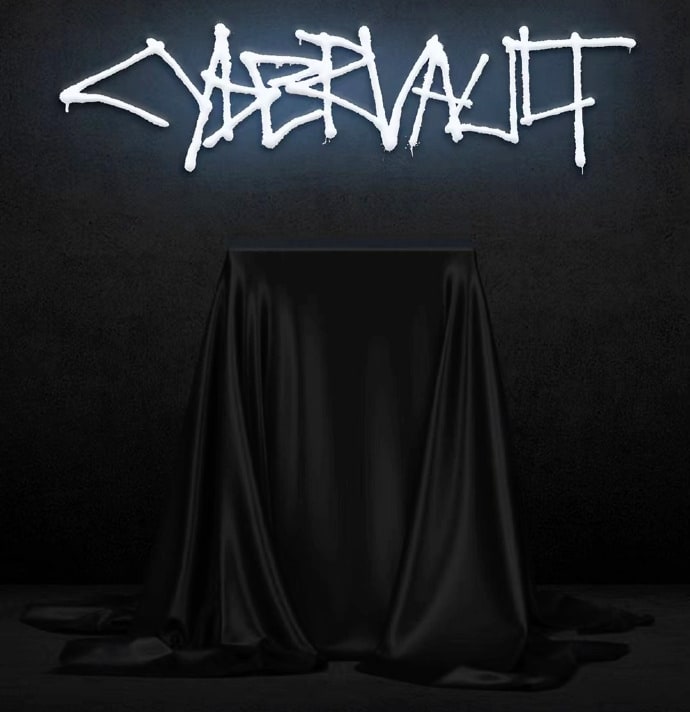
Tesla China has posted a cryptic announcement on its Weibo channel, setting off a flurry of speculation and rumors about the company’s plans for the April 3 reveal. The post features an image of an object cloaked in a black fabric called “Cybervault.” The accompanying phrases “Who is the protagonist this time?” and “special form, super power-up” have only added to the intrigue.
Possible Theories and Speculations
Several theories have emerged in response to the enigmatic post. Some Tesla owners in China have suggested that the Cybervault could be a new V4 Supercharger produced in Tesla’s Shanghai Supercharger factory. However, this theory seems unlikely, given the distinct Cybertruck font used in the announcement.
Other rumors circulating online propose that Tesla might unveil a new Powerwall or Wall Connector featuring a Cybertruck-inspired design. In addition, the recent sneak peek of Tesla’s upcoming wireless home charging system has led some to believe that the Cybervault could be related to this development.
An alternative theory speculates that the announcement could be related to something much larger than the mysterious vault, such as a Megapack factory. Recent Tesla Energy job postings in China and ongoing construction near Giga Shanghai suggest that a Megafactory could be in the works. In addition, Elon Musk’s rumored visit to China next week lends further credibility to the idea that a significant announcement is imminent.
Social Media Guesses and Fun Theories
Tesla fans have taken to social media to share their theories, with some suggesting possibilities such as “CyberValet,” “China semi,” and even “Cybertruck merch.” Others have noted that the Cybertruck bed is sometimes referred to as a “vault,” potentially hinting at a connection to the announcement.
Creative and amusing guesses have also emerged, including ideas like “Cybertruck-themed toenail clippers,” “CyberVault as a new kind of electric scooter,” and “a Cybertruck-inspired gaming console.” While these ideas might seem far-fetched, they showcase the excitement and imaginative spirit of Tesla enthusiasts.
The anticipation surrounding the April 3 reveal has sparked excitement and curiosity among Tesla enthusiasts. As speculation continues to mount, fans around the world hope that whatever product or development is unveiled will not be exclusive to the Chinese market and will eventually make its way to North America as well. With just a few days left before the big reveal, the Tesla community eagerly awaits the unveiling of the enigmatic “Cybervault.”
link