


Text | Liu Jingqiong
Editor | A Zhi
Cover source | Provided by the enterprise
Embodied intelligence, as a further extension of AI into the physical world, has huge market potential and has become a key target for capital to bet on the next growth pole under the background of “shifting from the virtual to the real”. According to IT Juzi data, in the first five months of this year, the financing amount in the robotics field has reached 23.2 billion yuan, exceeding the total for the whole year of 2024.
In addition to ground robots, low-altitude aircraft such as drones and eVTOLs are also one of the important directions for the implementation of the concept of embodied intelligence. Taking drones as an example, the airframe can be equipped with a variety of sensors to perceive the surrounding environment in real time, forming preliminary “sensory” information. The on-board AI algorithm will be like a “brain”, fusing, understanding, and making decisions based on this information, and controlling the drone to complete complex tasks at different intelligent levels through the generated flight instructions.
To transform an aircraft from a tool that can only be remotely controlled or fly along a fixed route into an airborne intelligent agent capable of independent “thinking” and “action” is also the ultimate goal of airborne embodied (intelligent) enterprises. Zhidao Technology is just such a company.
Zhidao Technology (Beijing) Co., Ltd. (hereinafter referred to as “Zhidao Technology”) was established in 2014 and is one of the earliest domestic companies to research and develop micro and small unmanned systems. It is now a “Specialized, Sophisticated, Distinctive, and Innovative” enterprise in Beijing, and its Tianjin subsidiary is also a “Specialized, Sophisticated, Distinctive, and Innovative” enterprise. The three founders of Zhidao Technology all graduated from the Robotics Research Institute of Beihang University and studied under Professor Wang Tianmiao of Beihang University. The core team of the company comes from the Robotics Research Institute and the Unmanned Aerial Vehicle Research Institute of Beihang University, Northwestern Polytechnical University, Harbin Institute of Technology and other relevant institutions. Founder Li Xiaoyu has more than 20 years of experience in researching drone-related technologies and experience in national-level projects. Currently, Zhidao Technology masters the core hardware and software technologies of drones, such as navigation, flight control, aircraft design, electro-optical pods, and servo control, and is one of the few manufacturers in the market with full-stack self-research capabilities.
Since its establishment, Zhidao Technology has completed four rounds of financing. The latest round of financing was completed in March 2025, exclusively invested by Yichen Capital. Currently, a new round of financing for Zhidao Technology is in progress, with Yundao Capital serving as the financial advisor.
Li Xiaoyu introduced that Zhidao Technology’s products include four major categories: mission payload systems, avionics systems, drones, and software and cloud systems, which have been applied in batches in various scenarios such as reconnaissance, inspection, and mapping. Among them, the avionics system is the basic business of Zhidao Technology, and its customers cover leading drone enterprises, large central state-owned enterprises, universities, research institutes and other institutions. The whole-machine business has brought a new round of growth space for Zhidao Technology. According to Li Xiaoyu, since 2025, the revenue from drones has exceeded that from avionics systems.
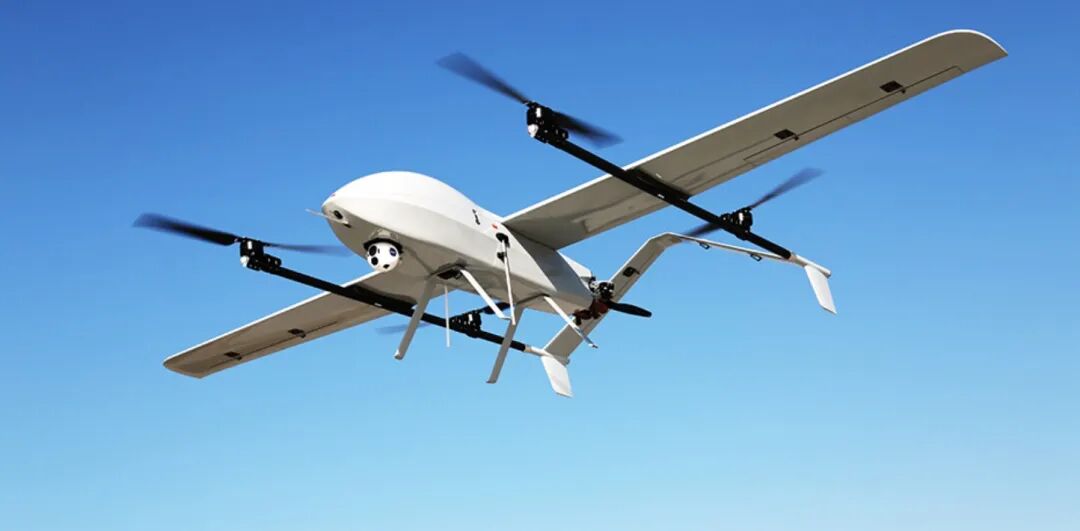
Medium-sized oil-electric hybrid drone QP555 with long endurance and large payload
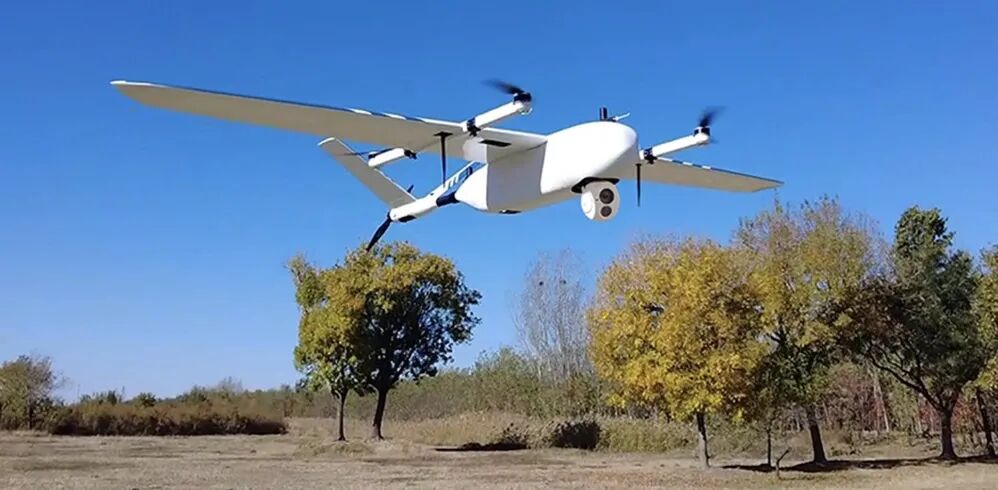
Pure-electric flagship drone QP530A
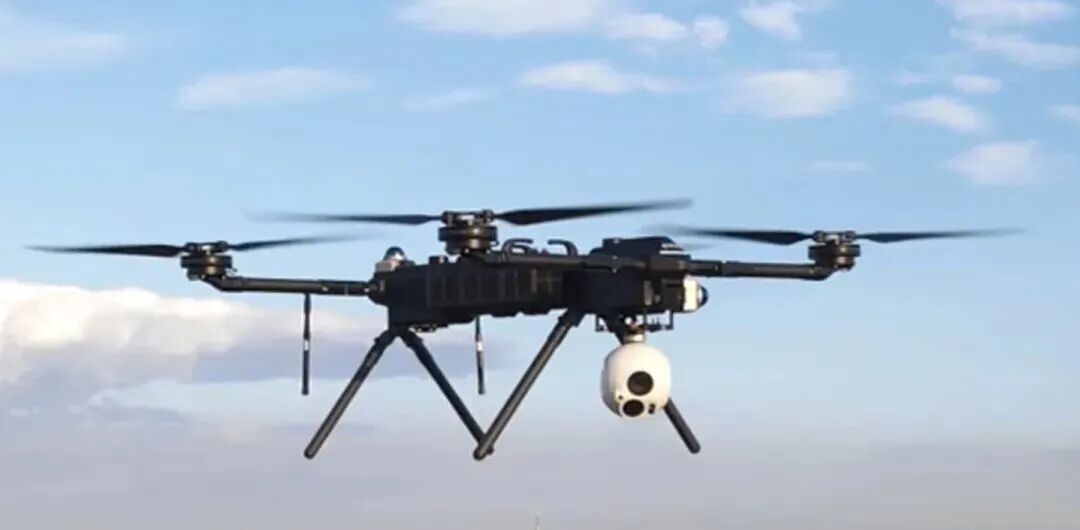
Industrial-grade rotor drone
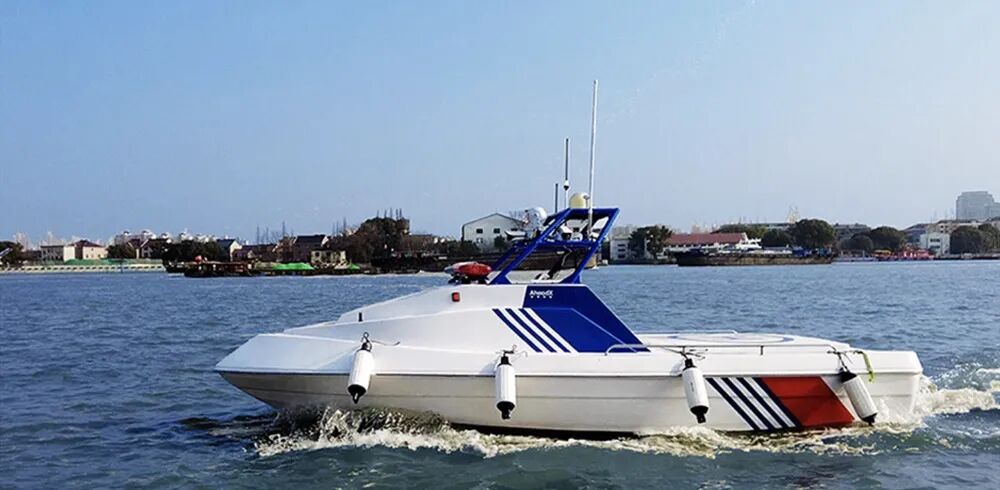
Unmanned surface vehicle

Self-developed avionics and mission payloads have been applied in batches to whole-machine products
In the entire drone industry chain, the design and manufacturing of the whole machine account for most of the value, and the avionics system and mission payload are the core links in the design and manufacturing of the whole machine. The combined cost of the two usually accounts for 50% – 70% of the cost of the whole machine. Due to limitations such as technical complexity, R & D investment, airworthiness certification requirements, and industrial ecosystem division of labor, there are not many suppliers in the industry that can self-develop both avionics and mission payloads, and Zhidao Technology is one of them.
Li Xiaoyu said that Zhidao Technology has the R & D and algorithm capabilities for T1-level avionics equipment and has the most comprehensive avionics system solution in China. “Our avionics business is centered around navigation and flight control, which are all self-developed from scratch by us. Based on navigation and flight control, we have successively developed a simulation training system, a battery management system, a mobile guidance takeoff and landing system, a motor drive system, etc.” It is reported that Zhidao Technology has provided avionics products to more than 900 customers.
Around 2021, the Zhidao Technology team began to get involved in the R & D of whole drones. In a whole drone, in addition to avionics, another key component is the mission payload. Their initial plan was to develop an electro-optical pod (mission payload) with a lifting structure. At that time, there was no manufacturer in the market that could meet their needs, so Zhidao Technology started the self-development of electro-optical pods in the same year.
“Taking a small pod weighing about one kilogram as an example, the similar products in the market have a focal length of 129 mm and 30x optical zoom, while ours has a focal length of 162 mm. Our 30x zoom is equivalent to their 40x level; moreover, our thermal imaging camera has a focal length of 35 mm, while the same type of small pods generally have a focal length of 19 mm or 25 mm, which means our products can see farther. In addition, our products are also equipped with a wide-angle camera and a laser ranging module.” Li Xiaoyu gave an example.
After overcoming the R & D of core avionics and mission payloads, Zhidao Technology launched two pure-electric compound-wing drones and one multi-rotor drone product, mainly targeting application scenarios such as reconnaissance, inspection, and mapping. Its self-developed avionics system and mission payload have begun to be applied in batches to whole drone products.
It is understood that on the premise that the performance indicators are similar or even partially better, the cost of Zhidao Technology’s whole drones can be about one-fifth of that of its competitors (the Vector series of drones from Germany’s Quantum Systems).

Promoting the industrialization of airborne embodiment, the total revenue is expected to exceed 100 million in 2026
According to the degree of drone intelligence, Li Xiaoyu divided the development of airborne embodiment into three stages: In the primary stage, drones have intelligent navigation and basic obstacle avoidance capabilities. Drones can estimate their position and maintain attitude stability in a GPS-free environment, and perform reactive obstacle avoidance relying on single-point ranging sensors such as ultrasonic and infrared sensors.
In the intermediate stage, drones have autonomous obstacle avoidance and intelligent decision-making capabilities. At this time, the sensors of drones are upgraded to visual cameras and lidars, which can form a real-time three-dimensional map of the surrounding environment; on this basis, drones can identify the types of different obstacles and actively plan a safe and efficient detour path.
In the final stage, drones will have full autonomous operation and system coordination capabilities. By then, drones will make anti-interference detour decisions similar to those of humans, and the entire process from task reception, planning, execution to the final result report will require no human intervention.
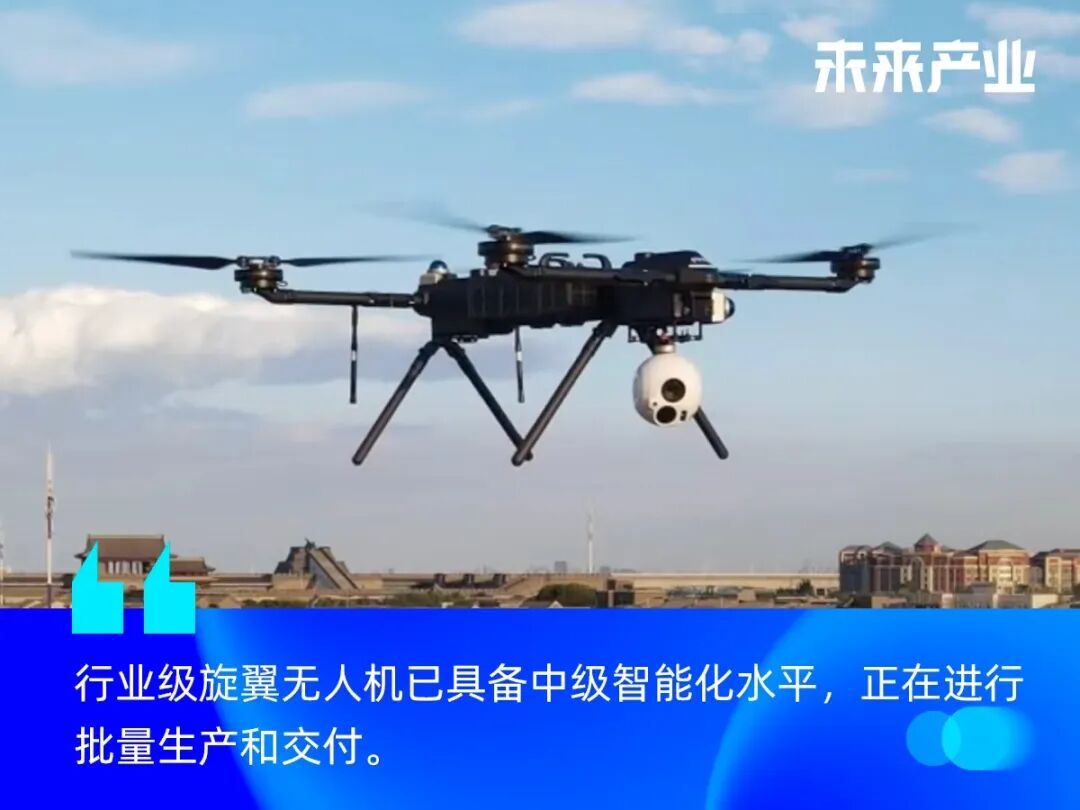
Two years ago, the Zhidao Technology team began to conduct applied research around airborne embodiment. Currently, its fully self-developed industrial-grade rotor drone has achieved intermediate airborne embodiment capabilities. By using lidar/INS/GNSS multi-modal positioning, it can achieve continuous obstacle avoidance in complex environments. Currently, this drone has completed technical verification and is being mass-produced in the Tianjin factory and will be delivered to customers successively.
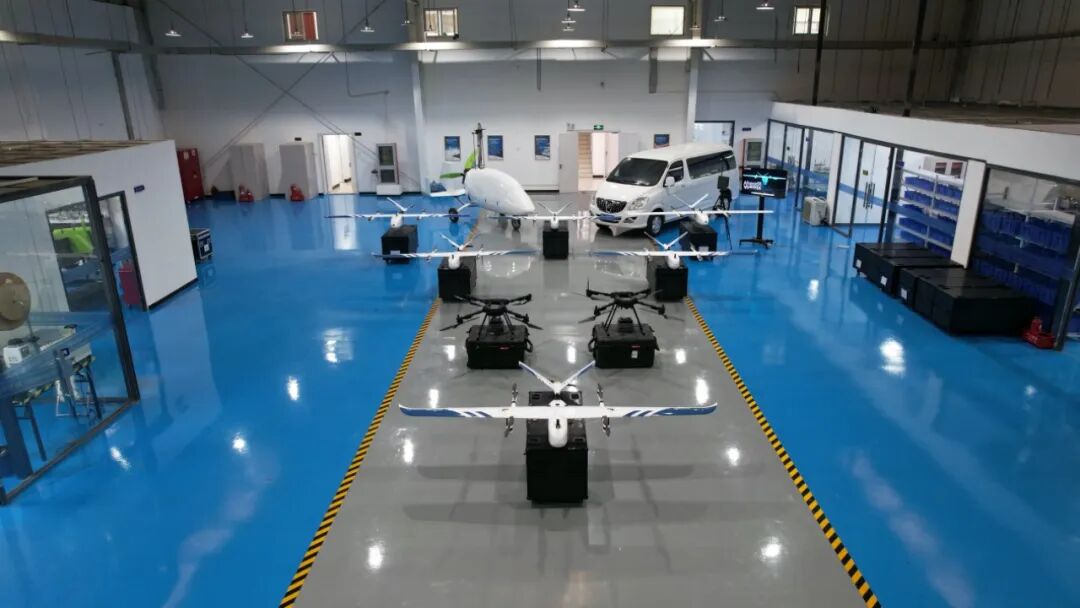
Production line of Zhidao Technology’s factory
Zhidao Technology’s production layout covers both Rizhao and Tianjin, which can deliver the company’s existing and newly added short-term orders. Among them, the Rizhao factory is responsible for producing the airframe shell and composite materials; the Tianjin factory is responsible for producing avionics systems such as navigation and flight control, mission payloads, and assembling the whole machine.
In Li Xiaoyu’s view, in the past, a large part of the drone market belonged to integrated manufacturers, that is, they assembled whole machines by purchasing parts from various parties and sold them; now, downstream customers have higher and higher requirements for product performance indicators and comprehensive experience. In the future, the market will require more integrated solutions to meet the demand.
In 2025, the revenue from Zhidao Technology’s drone business exceeded that from the avionics system. With the rapid increase in the shipment volume of whole drone products, Li Xiaoyu predicts that Zhidao Technology’s revenue will exceed 100 million in 2026.



link